Samsung vs SK Hynix: Which Korean AI Memory Stock Should You Buy?
Samsung vs SK Hynix — if you want exposure to the AI memory boom from Korea, these are the two names that dominate the…
Korea's "Big 4" defense firms — Hanwha, KAI, Hyundai Rotem, LIG Nex1 — have built a $69 billion order backlog and are reshaping how Europe buys weapons. Here's the investor's guide.
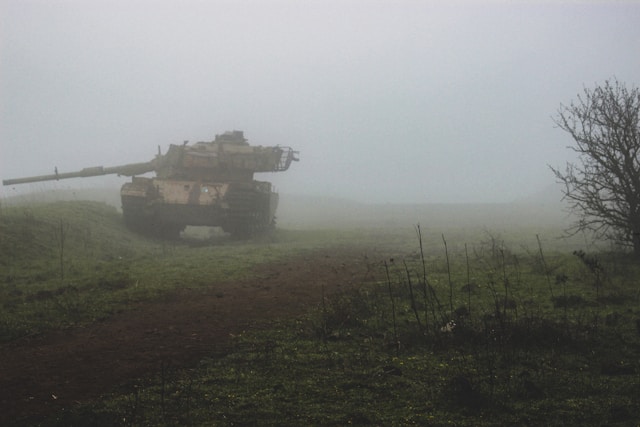
The Wall Street Journal breaks down how South Korea’s defense exports grew 177% in just five years, transforming the country into one of the world’s fastest-growing arms suppliers. WSJ’s reporting complements the structural analysis above with on-the-ground footage from Korean defense facilities.
Korean defense stocks have been one of the best-performing stories of the last three years — and it all traces back to a single moment. In July 2022, a Polish delegation walked into a Hanwha Aerospace factory in Changwon, South Korea. They signed a framework agreement worth roughly $12 billion — covering 672 K2 Black Panther tanks, 648 K9 Thunder howitzers, and 48 FA-50 light fighter jets. Most striking detail? First deliveries were scheduled to begin within three months. Comparable Western defense contracts typically require three to five years of lead time.
That moment didn’t just change the trajectory of one company. It reshaped how the world thinks about Korean defense.
Today, South Korea’s four largest defense firms — Hanwha Aerospace, Hyundai Rotem, Korea Aerospace Industries (KAI), and LIG Nex1 — have built a combined order backlog of roughly $69 billion in undelivered contracts. Combined revenue is forecast to exceed $37 billion in 2026. South Korea has become the second-largest arms supplier to NATO members in Europe, trailing only the United States. The country aims to become the world’s fourth-largest defense exporter by 2030.
If you’re a U.S. investor looking at this story for the first time, the obvious questions are: Which stocks matter? How do you actually buy them? And is the rally sustainable? Let’s break it down.
Korean defense is dominated by four firms. Each plays a different role in the export story.
| Company | Ticker (KRX) | Key Products | 2025 Highlight |
|---|---|---|---|
| Hanwha Aerospace | 012450.KS | K9 howitzers, Chunmoo MRLS, aircraft engines | Revenue 26.61T won; weapons sales +42% YoY |
| Hyundai Rotem | 064350.KS | K2 Black Panther tanks, rail systems | Largest single export contract ever (9T won Poland K2) |
| Korea Aerospace Industries (KAI) | 047810.KS | FA-50 light fighters, KF-21 Boramae | 2026 revenue forecast nearly doubles to 6T won |
| LIG Nex1 | 079550.KS | Cheongung II air defense, guided missiles | Q2 revenue +46%; lowest export share = highest growth runway |
According to the Stockholm International Peace Research Institute’s 2024 Top 100 report, Hanwha climbed from 24th to 21st globally with weapons sales of $8 billion. LIG Nex1 jumped from 73rd to 60th. Hyundai Rotem moved from 84th to 81st. KAI was the only Korean firm to fall — sliding from 54th to 70th on the back of delivery delays.
Combined revenue: 40.9 trillion won (~$30B). Combined order backlog: >100 trillion won (~$73B). Hanwha alone holds 28.1% of the total backlog. Export share: Hyundai Rotem 67.3%, Hanwha 42.2%, LIG Nex1 lowest — leaving the most growth runway.
K-Defense’s competitive edge isn’t about cutting-edge specs. It’s about three structural advantages that Western competitors can’t easily match.
Speed. Driven by the persistent threat from North Korea, South Korea built a defense industrial base optimized for maximum output and rapid deployment. When Poland needed tanks fast in 2022, Hanwha was delivering K9s within months. Lockheed Martin, BAE, and Rheinmetall typically need years.
Price. Korean systems often come in at 60-70% of comparable Western platforms. The K2 Black Panther is widely considered competitive with the German Leopard 2A7 — at meaningfully lower cost.
Financing. This is the underappreciated piece. In 2024, Poland secured up to $8.5 billion in loans from Korean banks to fund continued defense purchases. This “buyer’s financing” model has funded follow-on orders that Western competitors have struggled to match.
The result is a self-reinforcing loop. Once a country operates Korean fighters or tanks, future procurement decisions favor “Made in Korea” for interoperability reasons. By late 2025, Hyundai Rotem and KAI had signed additional Polish supply deals worth 13.9 trillion won and 4.2 trillion won respectively. Norway ordered the Chunmoo rocket system. Estonia signaled investment interest. Hanwha broke ground on a production facility in Romania — its first defense manufacturing base in Europe.
Hanwha is the K-Defense leader by every measure that matters: revenue, backlog, and brand recognition abroad. Q3 2025 consolidated sales hit 6.49 trillion won, up 147% year-over-year. Operating profit rose 79% to 856 billion won. Land systems and aerospace divisions led the growth, with strong expansion in European defense markets.
Korea Investment & Securities maintained a “buy” rating with a price target of 1.8 million won (current price around 1.32 million won as of May 2026), citing multiple export catalysts. The Chunmoo multiple rocket launcher system is drawing particular attention, with analysts estimating an addressable European export market exceeding 12 trillion won.
Hanwha also committed 1 trillion won in capital for U.S. market entry, promoting U.S. exports of K9 howitzers and Chunmoo systems. That’s a longer-term thesis — but if it works, it’s a meaningful new growth vector.
If you want a focused export play, Hyundai Rotem may be the cleanest. The August 2025 second K2 implementation contract with Poland — worth roughly 9 trillion won — was the largest single contract in Korean defense export history. Mirae Asset Securities forecasts 2026 operating profit growth of 55% with an operating margin of 22.3%.
Additional K2 export deals with Iraq are widely expected in 1H 2026, potentially followed by Romania, Peru, and a Poland EC3 follow-on. If those land, Mirae expects production capacity to double by 2027.
KAI is the most interesting situation. It was the only Big 4 firm whose ranking fell in 2024, and its Q3 2025 operating profit dropped 21% YoY on postponed Light Armed Helicopter deliveries and lost competitions. Internal labor tensions added to the noise.
Yet KAI’s 2026 revenue is forecast to nearly double — from 3.76 trillion won to 6 trillion won. The catalysts: continued FA-50 exports to Poland, and the KF-21 Boramae fighter program, which has export interest from the UAE, Indonesia, and Poland. This is the highest-variance, highest-upside name in the group.
LIG Nex1’s Q2 2025 revenue reached 883.4 billion won, up 46% YoY. Operating profit rose 69%. The Cheongung II air defense missile system is leading export growth.
The interesting structural fact: LIG Nex1 has the lowest export proportion among the Big 4. While Hyundai Rotem reaches 67.3% in exports and Hanwha sits at 42.2%, LIG Nex1’s export share is still relatively low. That’s not weakness — it’s runway. As guided missiles and air defense systems gain global traction, LIG has the most room to grow internationally.
Hanwha = scale and U.S. optionality. Hyundai Rotem = pure export momentum. KAI = high-variance turnaround. LIG Nex1 = longest growth runway.
Here’s the part most Korean defense coverage skips. None of the Big 4 has a U.S.-listed ADR. Hanwha, Hyundai Rotem, KAI, LIG Nex1 — all KRX-only. So if you’re a U.S. investor, you have three realistic paths.
1. KDEF — the U.S.-listed K-Defense ETF. In late 2024, Hanwha Asset Management teamed up with U.S. firm Exchange Traded Concepts to list the PLUS Korea Defense Industry ETF (KDEF) on the New York Stock Exchange. The fund tracks an index of around 10 major Korean defense and aerospace stocks, including all of the Big 4. For most U.S. investors who want diversified K-Defense exposure in one ticker, this is the cleanest option.
2. Broad Korea ETFs. EWY (iShares MSCI South Korea ETF) and FLKR (Franklin FTSE South Korea ETF) both contain some defense exposure as part of their broader Korean equity baskets — though defense is a smaller slice of the overall portfolio. We covered the EWY vs FLKR decision in detail in our Korea ETF guide.
3. Direct KRX access. If you want to own specific names — Hanwha, KAI, or others individually — you’ll need a brokerage account that supports direct trading on the Korea Exchange. Interactive Brokers is the most common route for U.S. investors. We walked through the full account-opening and FX process in how to buy Korean stocks from the U.S..
OTC quotations exist for some Korean names but are typically illiquid with wide bid-ask spreads. For most U.S. investors, KDEF (for diversified exposure) or direct KRX (for specific names) are the practical answers.
Korean defense is one of the best-performing equity stories of the last three years. That alone is a reason for caution.
Hanwha Aerospace has already moved from 600,000 won to over 1.3 million won. Analyst price targets sit near 1.8 million won — meaningful upside, but no longer the deep value the stock was in 2023. Position sizing matters more at these levels.
Other considerations:
K-Defense has moved from speculative to structural. The Poland deal proved the model. Romania, Norway, Estonia, and ongoing U.S. market entry are extending it. The $69 billion backlog provides multi-year revenue visibility. The “Big 4” each offer a distinct flavor of the same secular trend: Hanwha for scale, Hyundai Rotem for export momentum, KAI for asymmetric upside, LIG Nex1 for runway.
For most U.S. investors, KDEF is the practical entry point. For higher-conviction investors who want individual names, direct KRX access via Interactive Brokers remains the route. Either way, the K-Defense story is no longer about whether Korean defense can compete globally. It’s about how big the global share gets — and how long the rerating runs.
How to buy Korean stocks from the U.S., the Korea Value-Up Program reshaping Korean equities, the EWY vs FLKR ETF decision — all in one place.
More Korea Markets →Disclaimer: This article is for informational purposes only and does not constitute financial advice. Always consult a licensed financial advisor before making investment decisions.
Samsung vs SK Hynix — if you want exposure to the AI memory boom from Korea, these are the two names that dominate the…
You’ve decided Korea looks interesting — Samsung, the Value-Up reforms, K-Defense, AI memory. But how do you actually buy Korean stocks if you live…
External · Goldman Sachs Why Korean stocks could keep rising Goldman Sachs’ Enna Hattori breaks down why South Korea’s KOSPI has been one of…